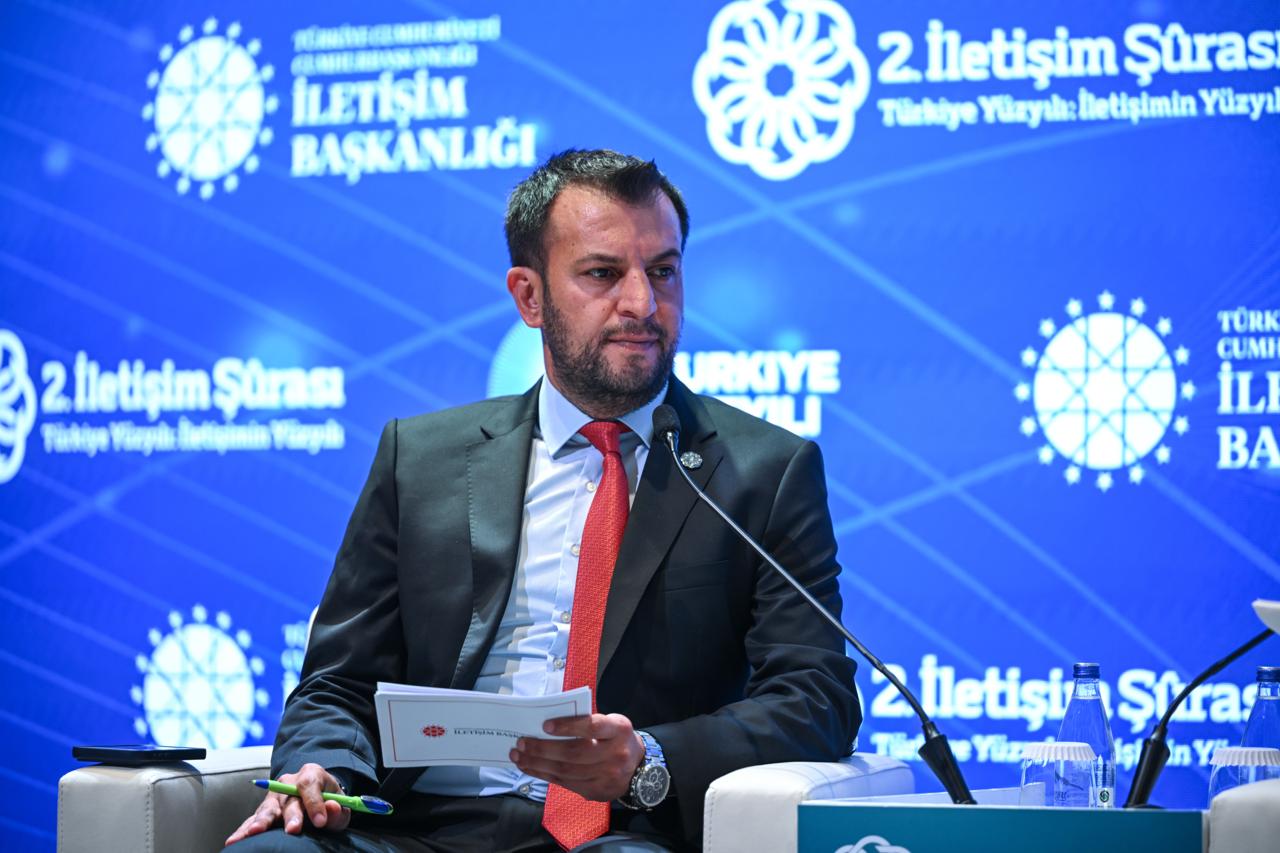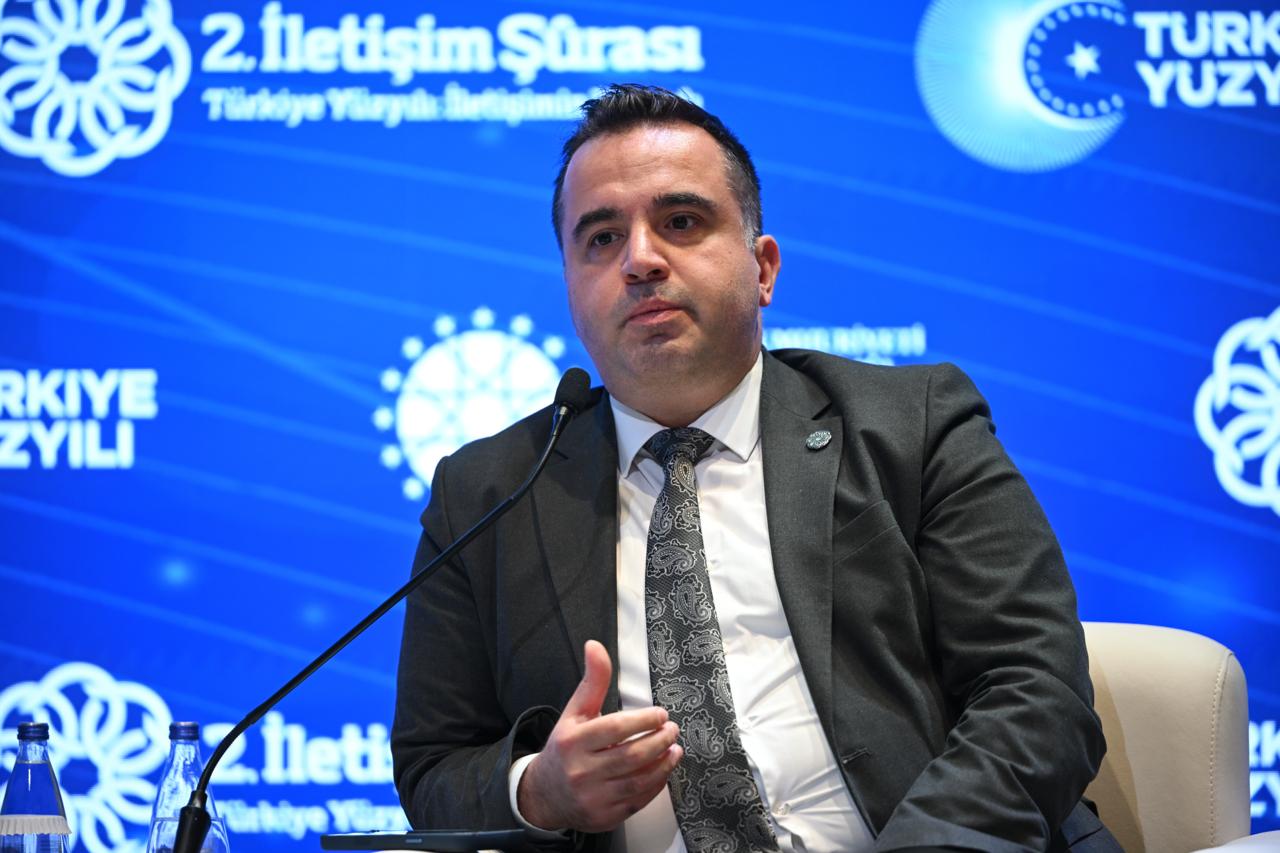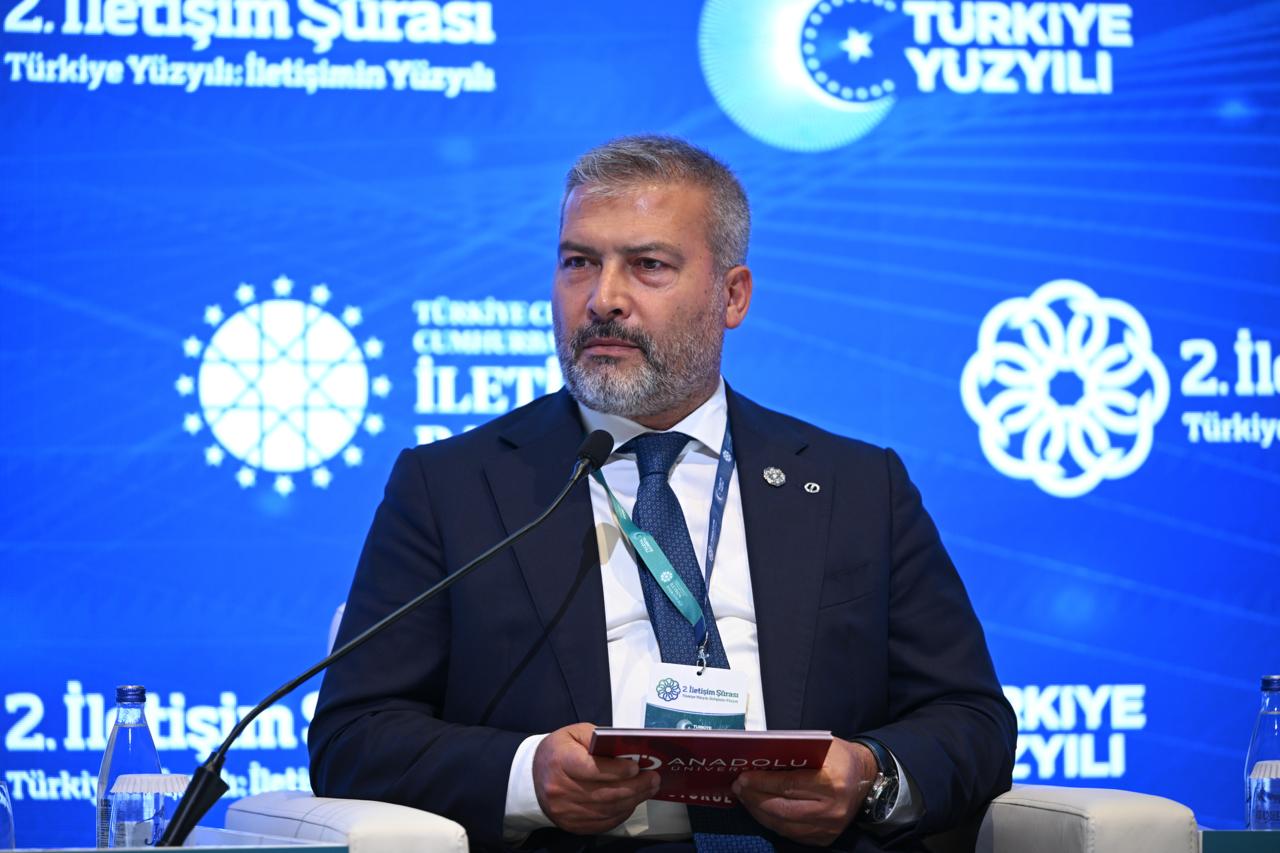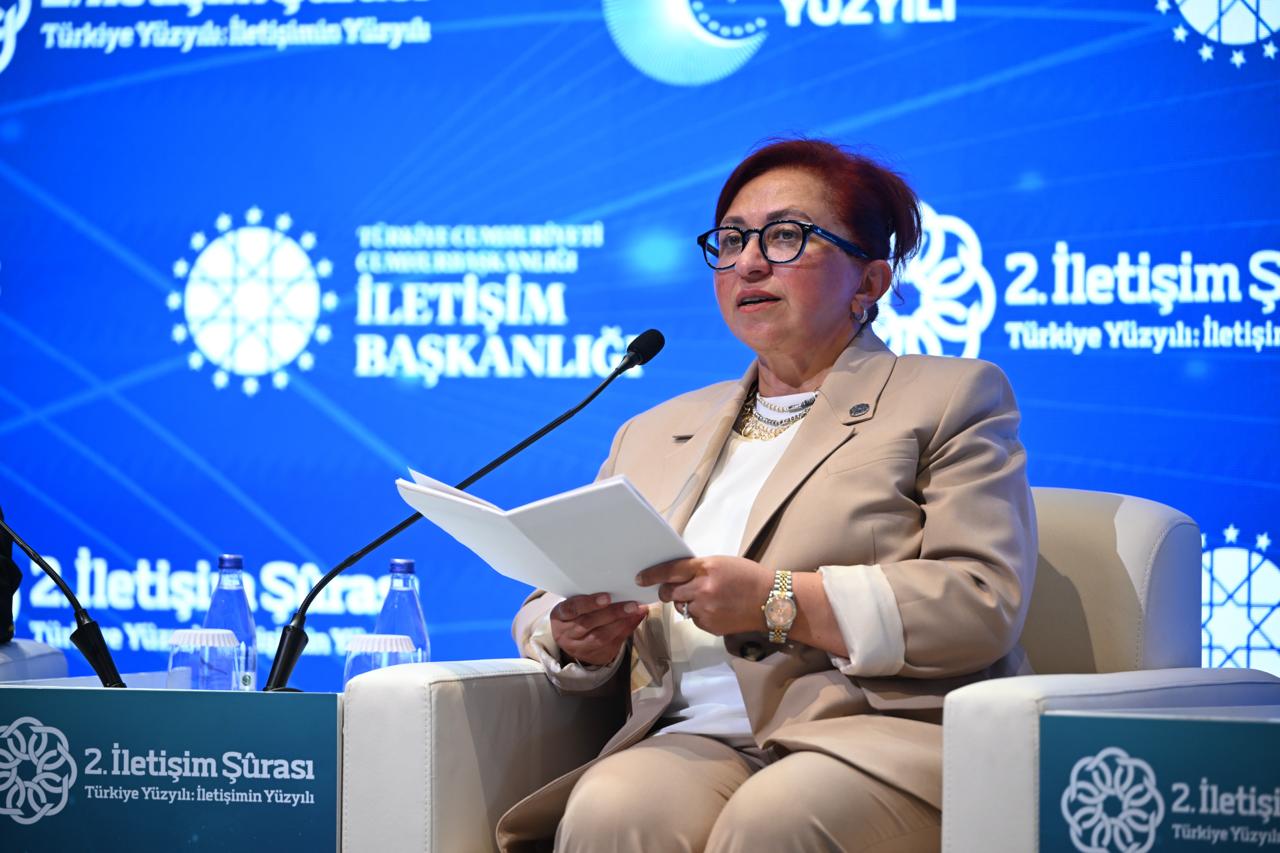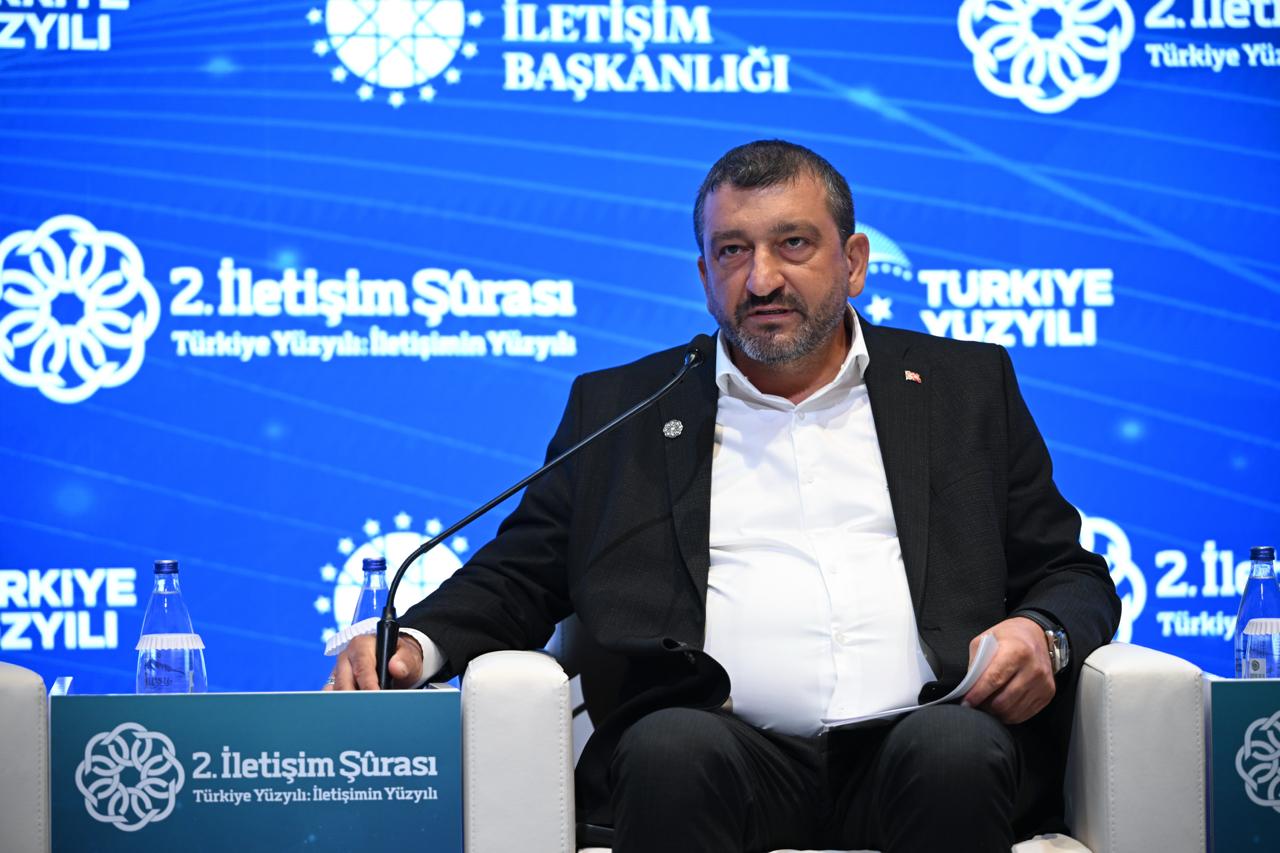

During the third session of the day, the reports and policy recommendations prepared following the working group meetings organised by the Directorate of Communications as part of the Second Communications Council were discussed under the theme ''Institutional Structures, Education and Working Life".
The session, moderated by Ahmet Erdem Erbek, Chief Legal Counsel of the Presidency's Directorate of Communications, featured the public presentation of reports and policy recommendations prepared by various working groups. Presentations on the working groups' findings were delivered by Prof Edibe Sözen Çetintaş, Rector of Maltepe University; Prof Yusuf Adıgüzel, Rector of Anadolu University; Sezai Ballı, President of the Media Workers' Union; and Durmuş Ersoy, Head of the Public Relations Department at the Presidency's Directorate of Communications.
Prof Edibe Sözen Çetintaş, Rector of Maltepe University, was the first to speak, presenting on behalf of the ''Communication Law and Legal Regulations'' Working Group. She stated:
''Mandatory labelling requirements should be introduced to counter the threat of deepfakes and algorithmic disinformation, while our children should be equipped with compulsory digital media literacy education from primary school onwards.''
Speaking on behalf of the ''Communication Education in Türkiye'' Working Group, Prof. Yusuf Adıgüzel, Rector of Anadolu University, underscored the importance of developing curricula aligned with the requirements of digital transformation in communication education, stating:
''To equip students with the skills needed to address the challenges posed by new media, curricula should incorporate training on artificial intelligence, cybersecurity, open-source intelligence (OSINT), and countering disinformation.''
Presenting on behalf of the "Communications Sector and Working Conditions" Working Group, Sezai Ballı, President of the Media Workers' Union, noted that the existing Press Labour Law no longer fully meets the needs of the new media ecosystem that has emerged with digitalisation and put forward the following proposal:
''As the current Press Labour Law does not fully address the new media ecosystem that has emerged through digitalisation, it should be updated to cover freelancers and part-time employees, while remaining a separate law rather than being merged with the Labour Law.''
Presenting on behalf of the ''Public Relations and Corporate Communications'' Working Group, Durmuş Ersoy, Head of the Public Relations Department at the Presidency's Directorate of Communications, stated that artificial intelligence and digitalisation have made significant contributions to the field of public relations, saying:
''Although artificial intelligence and digitalisation accelerate data analysis and routine tasks while contributing to crisis management, empathy, cultural sensitivity, and people-centred communication must remain indispensable elements of public relations.''
During the panel, working group recommendations on communication law, communication education, working life, public relations, and corporate communications were presented, while assessments and proposals aimed at strengthening the communications ecosystem from legal, academic, and institutional perspectives were discussed.